



Choose the piece that really catches the eye
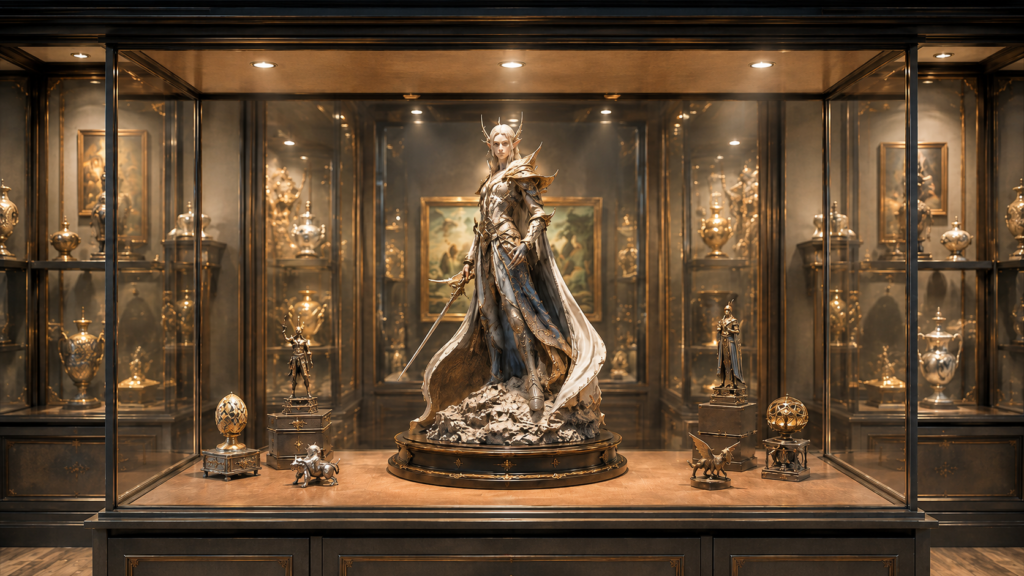
Some figurines remain unobtrusive, even when they’re very beautiful. And then there are those that naturally take their place. You notice them the moment you walk into the room. They anchor a shelf, add character to a display case, and create an atmosphere almost instantly.
Choosing a centerpiece for a collector’s display case isn’t simply a matter of picking the largest or most spectacular piece. It’s about choosing a piece that has enough presence to interact with the others without overwhelming them. A well-thought-out pose, a clearly defined silhouette, masterful painting, or a highly detailed sculpture can be enough to transform an entire display case.
When collecting resin figurines—especially large-scale ones like 1/9, 1/6, or 1/4—this question quickly becomes important. Which piece should be placed in the center? Which one deserves the most prominent spot? And how can you avoid the “objects just placed side by side” effect?
Why a Central Figurine Can Transform an Entire Display Case
It provides a visual direction for the collection
A successful display isn’t just a collection of beautiful pieces. It’s a small setting, a silent scene. The eye naturally seeks a focal point. A central figurine plays this role: it first catches the eye, then invites you to look at the rest.
It could be a warrior in armor, a fantasy creature, a manga character, a dark fantasy demon, a historical bust, or a science fiction figurine. The subject matter matters less than its presence. A good centerpiece sets the tone for the entire display: heroic, dark, elegant, eerie, noble, or spectacular.
Without this focal point, the display can seem chaotic. Each figurine struggles to stand out. With a well-chosen centerpiece, the others become visual accents. They enhance the atmosphere rather than distracting from it.
It creates a hierarchy among the pieces
Not all figurines need to serve the same purpose. Some are meant to be admired up close—for their textures, accessories, and expressions. Others are best appreciated from a distance—for their silhouette or posture.
The central figurine serves as a focal point. It tells the viewer, “Start here.” The pieces around it can then complete the story. An imposing creature can be surrounded by more understated figures. A very elegant female figurine can be accompanied by busts or darker pieces. A historical warrior can become the centerpiece of an area dedicated to armor, weapons, and martial themes.
This hierarchy makes the display more pleasing to the eye. It prevents the display from looking cluttered, as if each item were placed there at random.
Criteria for Choosing a True Centerpiece
The overall look is just as important as the details
We often focus on the details: armor, face, drapery, weapon, base, skin texture, hair, and accessories. Of course, all of these things matter. But for a central figure, the silhouette is even more important.
A good silhouette is recognizable even from a distance. It has a clear outline: a flowing cape, a raised sword, outstretched wings, a twisted pose, and a calm yet commanding demeanor. The figure must be recognizable even before its details come into view.
This is especially true in a display window. Behind glass—where there may be reflections or imperfect lighting—a figurine that’s too compact can get lost. Conversely, a piece with a strong posture retains its impact.
Facial expressions and body language reveal a lot
A central figurine must have a purpose. It can challenge, protect, seduce, threaten, meditate, move forward, or wait. Even a still pose can be powerful if it gives the impression that the character truly exists.
A warrior who tilts his head slightly downward may seem more dangerous than a character in the midst of action. A sorceress with a restrained gesture can exude more mystery than one striking a very showy pose. A massive creature, even when standing calmly, can command a formidable presence if its head, shoulders, and base are well-composed.
It’s often this attitude that makes a figurine the piece we look at most often.
The universe must be clear
To stand out, a figurine must also convey a clear atmosphere. Fantasy, horror, manga, science fiction, mythology, historical, steampunk: each genre has its own visual style.
A dark fantasy figurine can create a somber, almost ritualistic atmosphere. A manga-style piece can add more movement, color, and stylization. A historical or warrior figurine often conveys a sense of nobility, tension, or narrative. A fantasy creature draws the eye with its strangeness and visual presence.
The right choice, therefore, depends on the atmosphere you want to create in the window display. A centerpiece isn’t just “beautiful”—it sets the tone.
Centerpiece figurine for display case collection: resin, scale, and finish
Large scales provide more breathing room
1/9, 1/6, and 1/4 scale figures do not have the same visual impact in a display case. A 1/9 scale figure can be very expressive while still being easy to incorporate into a display. It works well in display cases that are already full or in arrangements featuring multiple characters.
The 1/6 scale often strikes an excellent balance. The piece already has a real presence, but it remains relatively easy to incorporate into a varied collection. The details of the face, costume, weapons, and base become more visible.
The 1/4 scale, on the other hand, completely changes the relationship to the object. It’s no longer just a decorative figurine. It’s more like an imposing, almost sculptural collector’s item. It requires space, good lighting, and a spot that lets it breathe.
Whether the finish is raw or painted changes how it looks
An unpainted figurine puts the sculpture front and center. You can see the forms, lines, and textures more clearly. It’s a great choice for collectors who like to paint their own figurines, or for those who appreciate the piece as an artistic foundation.
A painted figurine adds another dimension. Contrasts, shadows, textures, and colors guide the viewer’s eye. Good coloring can emphasize the character’s demeanor, highlight the face, distinguish the elements of the costume, and add depth to the base.
As a centerpiece, a painted finish often makes a stronger immediate impact. But a beautiful, unpainted figurine, when displayed well, can also look stunning if the sculpture is expressive enough.
The base contributes to the overall presence
We sometimes forget about the base. Yet it plays a huge role. A rocky base, an architectural element, a ruined backdrop, a mechanical base, or an organic texture can anchor the figurine in a world.
A centerpiece with an ornate base appears more visually stable. It doesn’t seem to float in the display case. It already tells a fragment of a story. For a creature, the base can emphasize its scale and menace. For a mythological figure, it can evoke the atmosphere of a temple, a battlefield, or a legendary scene.
The base doesn’t necessarily have to be solid. Above all, it must be consistent.
How to place the central figurine in the display case
Leave some space around the piece
A central figurine needs space. If it’s glued to other pieces, it loses some of its impact. The empty space around it isn’t wasted—it serves to highlight the figurine.
Ideally, you should leave a little space on the sides, above the head, and in front of the base. This allows the eye to take in the figure’s silhouette. A highly detailed piece that’s too cramped ends up looking less impressive.
This is even more true with large-scale models. A 1/4-scale figurine squeezed into a display case that’s too low can look clunky. When placed just right, it becomes majestic.
Adjusting Eye Level
The best centerpiece figurine often deserves to be placed at or near eye level. Not necessarily exactly in the center of the piece of furniture, but in an area where the eye naturally falls.
A figure that is too short loses its impact. A figure that is too tall can be difficult to view, especially if the details of the face or torso are important. For a painted figurine, height also affects how light reveals contrasts.
Here’s a good, simple test: stand two meters away from the display window. The central piece should be immediately recognizable, without having to look for it.
Avoid visual competition
Two very striking pieces placed side by side can clash. A large figurine of a creature with outstretched wings and another very colorful piece right next to it may create visual tension. The eye is drawn back and forth between them.
That doesn’t mean you should avoid eye-catching displays. You just need to organize them. Start with a central display, followed by quieter secondary displays. Or a display case divided by theme: dark fantasy on top, colorful manga elsewhere, and historical works on another shelf.
Consistency gives each figure its strength.
Figurine Workshop: Thinking of the Piece as a Collectible Item
At Atelier Figurines, a custom-made resin figurine is not just a decorative item to be placed on a shelf. It is a piece chosen for its unique style, scale, finish, and presence.
The choice between unpainted and painted versions allows you to tailor the figurine to its intended use. An unpainted version may appeal to a collector-painter who values the process of personal color application. A painted version may be suitable for someone looking for a piece that’s ready to display, with an immediate visual impact in a display case.
Large scales such as 1/9, 1/6, and 1/4 also allow you to choose the desired level of presence. A 1/9-scale piece can enrich an already extensive collection. A 1/6-scale figure can serve as an excellent focal point. A 1/4-scale piece can serve as the centerpiece in a dedicated display area.
The important thing is to choose thoughtfully. A centerpiece should reflect your personal taste, but also the atmosphere you want to create in your home.
Conclusion
Choosing a centerpiece figurine for your display case isn’t about finding the largest piece at any cost. It’s about finding the one with the right silhouette, the right pose, the right theme, and the right scale to bring the whole display to life.
A well-designed display tells a story. It can evoke a battle, a fantasy world, a collection of heroes, a gallery of creatures, or a modern cabinet of curiosities. The centerpiece serves as the entry point into this story.
Take the time to observe the shapes, poses, details, and available space. A beautiful resin figurine deserves better than a random spot. When chosen well and displayed properly, it can become a piece that you’ll still enjoy looking at years later.
FAQ
It all depends on the size of your display case and the effect you’re going for. A 1/9-scale figure fits easily into a dense collection. The 1/6 scale often offers a great balance between presence and ease of display. The 1/4 scale requires more space but can become a true centerpiece. Before making your choice, measure the available height, the depth of the shelf, and the space around the figurine.
Not necessarily better, but often more immediately striking. The paint adds contrasts, colors, and depth that quickly catch the eye. For a display case, this is a major advantage. An unpainted figurine can, however, become a superb centerpiece if the sculpture is striking, especially for a collector who enjoys painting the figurines themselves or who wants to appreciate the pure forms of the resin.
The simplest approach is to create a hierarchy. Choose a central piece, then arrange smaller or more understated secondary figurines around it. Leave some empty space, especially in front of and around the main piece. Avoid mixing too many very contrasting themes on the same shelf. A display case looks more balanced when each figurine has its own space.
There’s no one-size-fits-all rule. A fantasy figurine can create an epic atmosphere, a dark fantasy piece can evoke a somber and theatrical presence, a manga figurine can add movement and color, while a historical warrior often conveys a sense of strength and narrative. The best choice is the one that matches the atmosphere you want to experience when you walk into the room.
This is often a good approach. By choosing the centerpiece first, you give your display a sense of direction. The other figurines can then complement its theme, scale, or color scheme. But the reverse also works: if you already have a collection, look for the piece that’s missing to give it more balance, height, or character.